

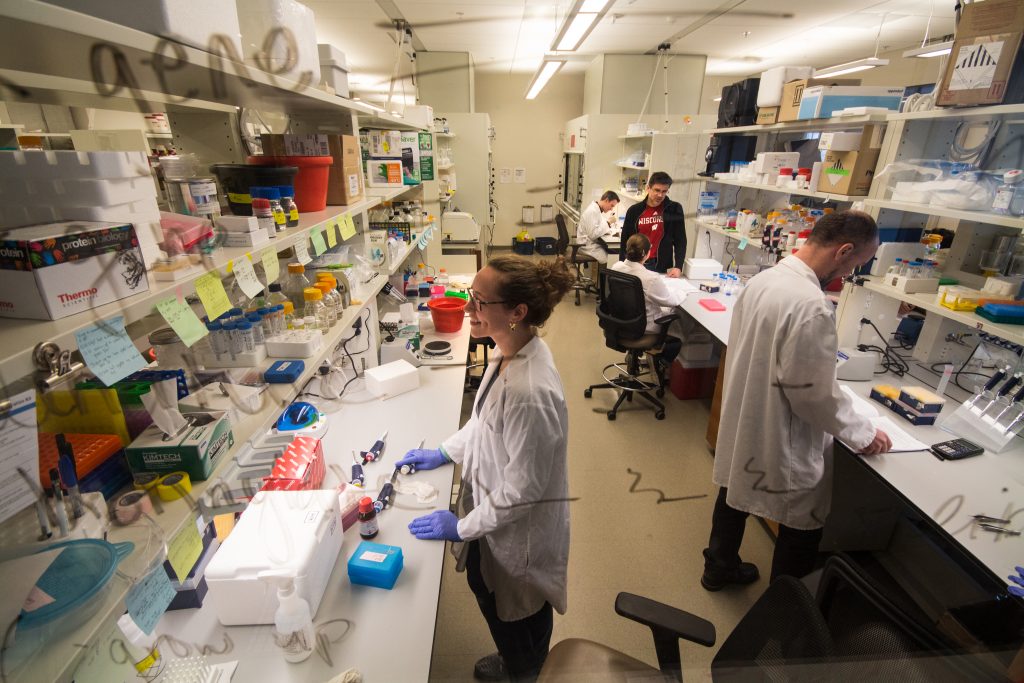
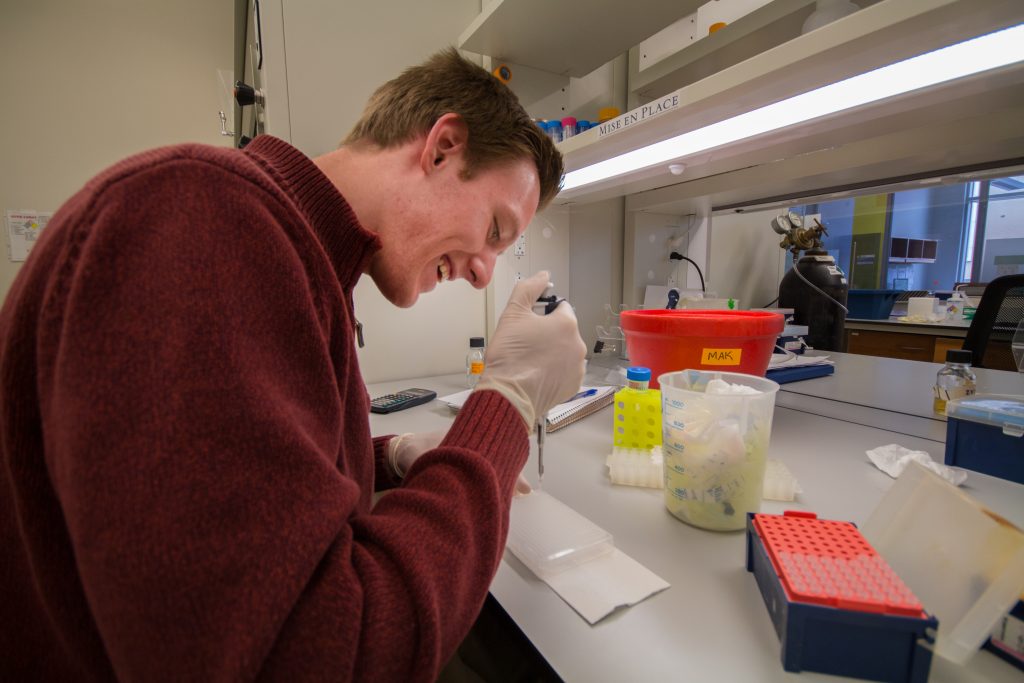
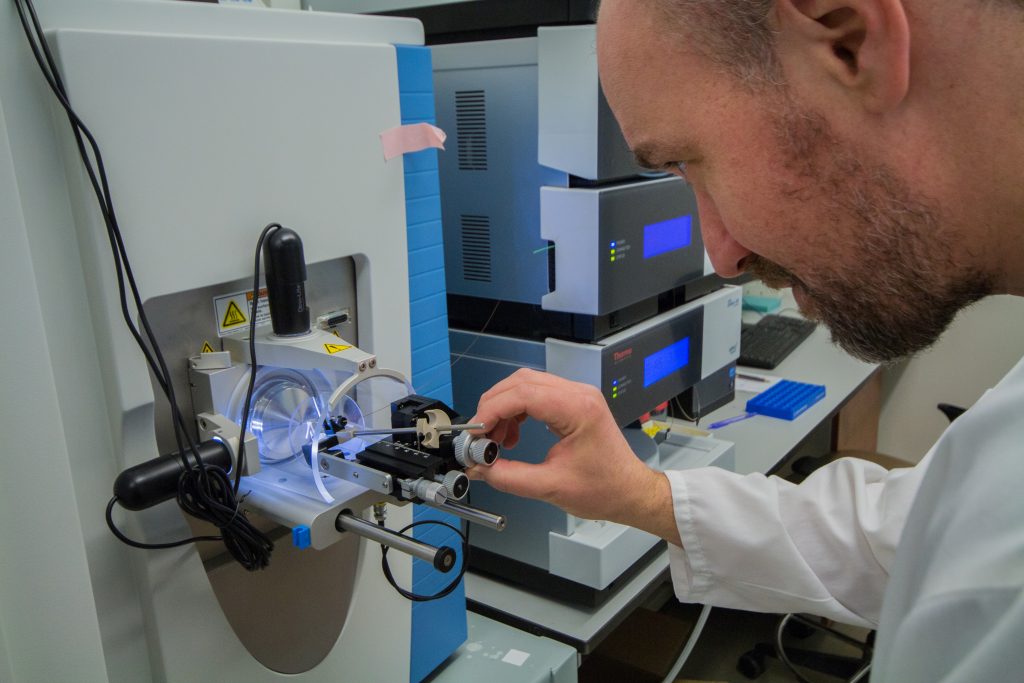
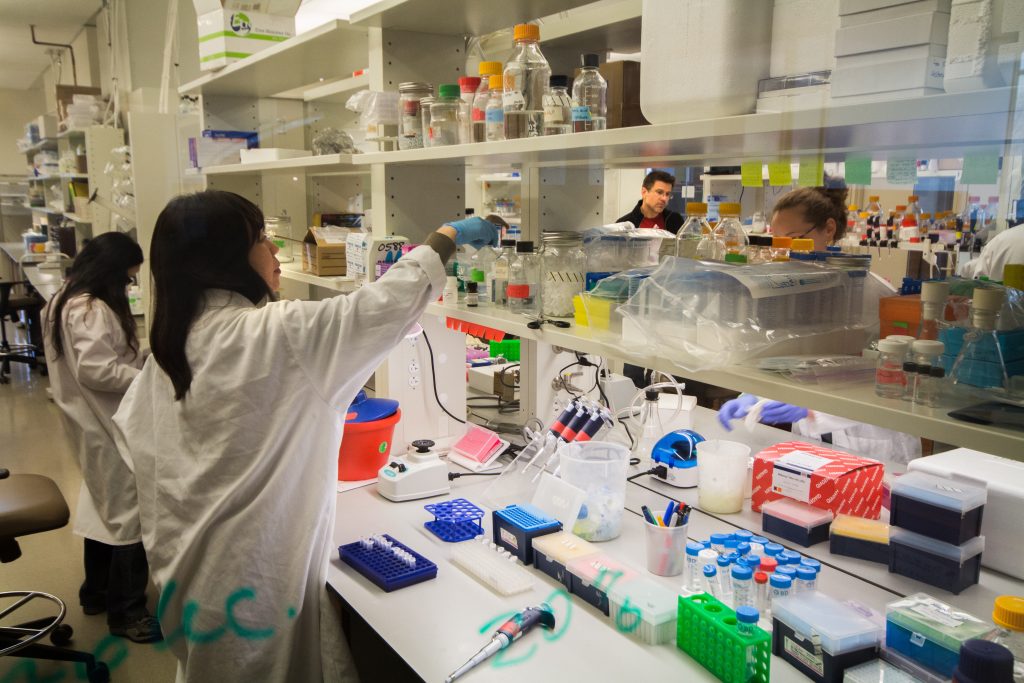
We are an inclusive group of researchers that endeavor to understand how different phenotypes can be generated from a single genome. The collection of UW-Madison researchers offers a diverse perspective on the growing fields of epigenetics and chromatin-based regulation of gene expression. This website is intended to share information about events, faculty and resources available within our epigenetics community. This rich research community also provides an excellent training environment for current and prospective Graduate students and Post-doctoral trainees.
The goals of the UW Epigenetics Program are to investigate, educate, and promote how the epigenome contributes to phenotype and homeostasis. The Program functions as a UW-Madison campus community to foster interdisciplinary collaborations with basic and translational research in epigenetics at the molecular, systems and organism level. Members of this community represent diverse but complementary disciplines that all seek to understand how the epigenome, in collaboration with the genome, control biological and molecular fate. Importantly, this understanding will lead to new insights into how humans and other organisms control their own epigenetic destiny by lifestyle, diet and other environmental factors.
Goals
- Create and maintain a dynamic community that effectively shares expertise, skills and reagents to rapidly advance research in the broad field of epigenetics.
- Enrich trainee (student and post-doc) experiences by engaging the diverse UW-Madison research community.
- Establish a culture that creates opportunities to develop non-traditional collaborations.
- Co-sponsor relevant outside seminar speakers.
- Participate in actionable items that accelerate epigenetics research: (i)Writing grants for Program Projects and shared instrumentation (ii)Participation in workshops.
- Develop courses/workshops that enhance understanding of epigenetic/chromatin.
- Execute annual epigenetics retreat.
- Facilitate monthly Epigenetics Group Discussions/seminars.
Faculty


















Training
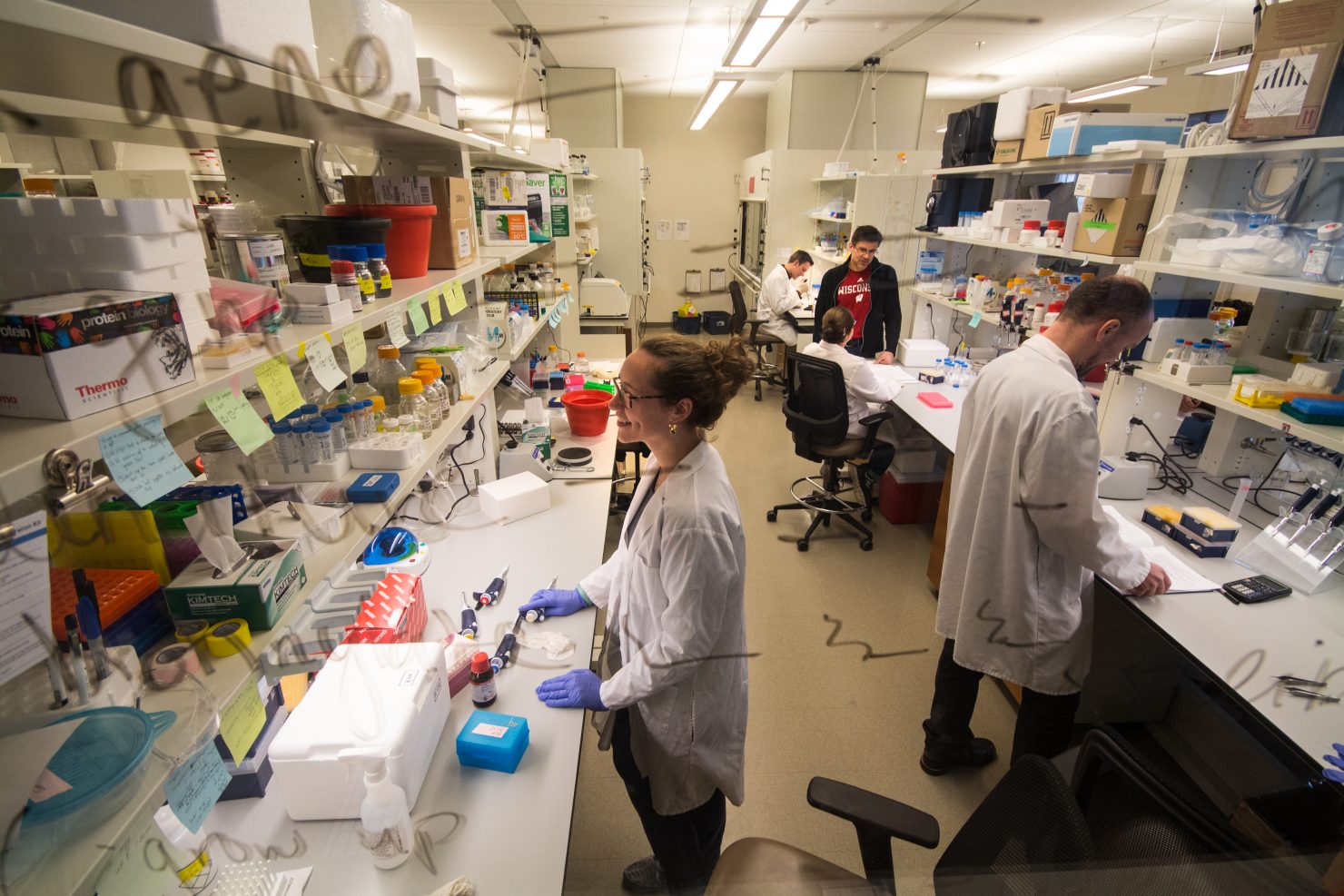
While Epigenetics is not a department/degree program, faculty in multiple departments and degree programs are affiliated with this initiative. Graduate Students interested in Epigenetics can pursue a PhD with any of the listed faculty by applying to the appropriate training program listed on the prospective graduate adviser’s page under the Faculty tab. In addition, many Epigenetics faculty are part of interdisciplinary training programs that offer pre-doctoral student traineeships including the molecular biology training grant (MBTG) and genome sciences training program (GSTP).
Relevant Courses
- Nutritional Sciences 619 (also Biochem 619) Advanced Nutrition: Intermediary Metabolism of Macronutrient
- Biochem 630 Cellular Signal Transduction Mechanisms
- STAT-877 Statistical methods- Molecular biology. How to apply statistical models in biological problems
- Genetics 677: Epigenetics
- CS 367 Study of data structures
- Stats 571 Statistical Methods for Bioscience I
- Nutri Sci 875 Topics in Proteomic and Genomic Analysis
- Biochem 620 Eukaryotic Molecular Biology
- Biochem 601 Protein and Enzyme Structure and Function
- Biochem 660 Biochemical Techniques
- BMC 675 Biochemistry of the cell
- CS 301 Introduction to Data Programming
- BIOCHEM 612 Prokaryotic Molecular Biology
- BMC/CHEM 627 Adv/Spec Topics in Mass Spectrometry
Events & News
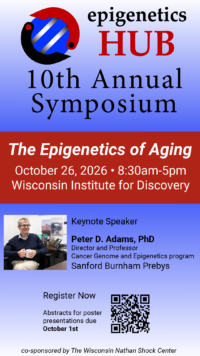
Registration now open for 10th annual Epigenetics Symposium
Registration now open for 10th annual Epigenetics Symposium The Epigenetics of Aging October 26, 2026, 8:30am-5:00pm Wisconsin Institute for Discovery Keynote Speaker: Peter D. Adams, PhD – Director and Professor, Cancer Genome [...]