

Optimization

The optimization group at the Wisconsin Institute for Discovery (WID) in Madison, Wisconsin, brings together a rare combination of researchers with a variety of optimization specialties who study and develop new methods, as well as apply these methods, to a wide range of important real-world problems. The team’s dual emphasis on research and applications makes it unique. Optimization experts tend to specialize in tackling problems that involve either discrete variables, which are essentially yes or no decisions, or continuous variables, where design parameters fall along a continuum of values. Such optimization teams at other institutions tend to have expertise in one class of problems or the other. The WID team has experts in both. To tackle real-world issues, the researchers translate problems into mathematical equations that can be solved and analyzed, and develop the optimization methods for solving these problems. The team work closely with other researchers to expand the use of optimization methods to their WID sponsored projects, such as systems biology, epigenetics or medical devices.
Faculty











Resources
UW–Madison
- Optimization Cluster
- The NEOS Server is a free internet-based service for solving numerical optimization problems.
- The NEOS Optimization Guide provides information about the field of optimization and many of its sub-disciplines. The focus of the content is on the resources available for solving optimization problems, including the solvers available on the NEOS Server.
- The Machine Learning and Optimization Research Consortium facilitates interactions between industry partners and researchers at the University of Wisconsin-Madison.
On the web
- Links to blogs, communities, conferences, magazines and newsletters, online resources, and publications related to optimization
- Optimization Online: Archive to technical reports in optimization
- GAMS
- AMPL
- Data Science Education Guides
Current Students
Alumni
Graduate Studies
The optimization group at the University of Wisconsin-Madison is a great place to do graduate studies in optimization. Our faculty have diverse interests and appointments in numerous departments on campus. The group’s position in the Wisconsin Institute of Discovery in the Discovery Building provides a nucleus for research activities with collaborators around campus. Many of our graduate students from various departments work, study and meet with their research themes in the optimization space of the Wisconsin Institute of Discovery.
Over the years, the optimization group at UW-Madison has been distinguished by its contributions to the mathematical theory of optimization, its collaborations with the faculty at UW-Madison – and beyond – on interdisciplinary research projects, and its contributions to the modeling and computational aspects of optimization. The Wisconsin Institute of Discovery in Madison provides a special environment that encourages interdisciplinary research, which in turn motivates new core research in optimization.
The group also studies complex problems beyond WID. Examples of ongoing projects include optimization and machine Learning for functional brain imaging, strategic optimization for improved water quality and enhancement of natural resources, algorithms for data analysis (and application to large scale agricultural problems), and designs for more reliable electric grids.
Your Graduate Career in Optimization@UW
Graduate studies in optimization at UW-Madison offer:
- A well-rounded and diverse course curriculum in optimization.
- Opportunities to take courses from great faculty at UW-Madison in areas related to optimization and its applications like statistics, mathematical analysis, artificial intelligence and machine learning, and signal and image processing.
- An opportunity to do independent study courses, which typically involve meeting individually with professors on a regular basis to study a topic of mutual interest.
Support
Contact professors for Research Assistantship availability. Departments offer some Teaching Assistantships and grading support (differs according to department and budget). Availability depends on current research funding, positions typically include tuition remission and stipend. Limited opportunities for Tutorial Assistantships are also available in some departments.
Applications
Data Analytics
Large data sets require statistical analysis, but some data may come in varied forms (text, audio, video, sensor data, etc.). To cope with data structure variations, optimization explores integrating statistical processing techniques with data processing systems to make such systems easer to build, maintain and deploy.
Mass digitization of printed media into plain test is changing the types of data that companies and academic institutions manage. Scanned images are converted to plain text by conversion software, but often the software is error-prone. Any query of the digitized media may miss information that may lead to a poor results or applications. Staccato software improves the digitization process.

Core Technology
Operational (tactical) and strategic mathematical models are used in the optimization decision process to determine more efficient and effective ways to control and manage a system or process. Mathematical models are routinely used in natural sciences (physics, biology), engineering (artificial intelligence, computer science) and social science (economics, political science). However, the lack of agreement between theoretical (mathematical) models and experimental measurement in any discipline often leads to important advances since better theories are developed. Optimization helps create better theories and improves systems/processes in many disciplines. The biggest challenge is to engage the designer, collect the appropriate data and determine the appropriate model (linear vs. nonlinear, deterministic vs. probabilistic, static vs. dynamic or discrete vs. continuous).
Science and Art
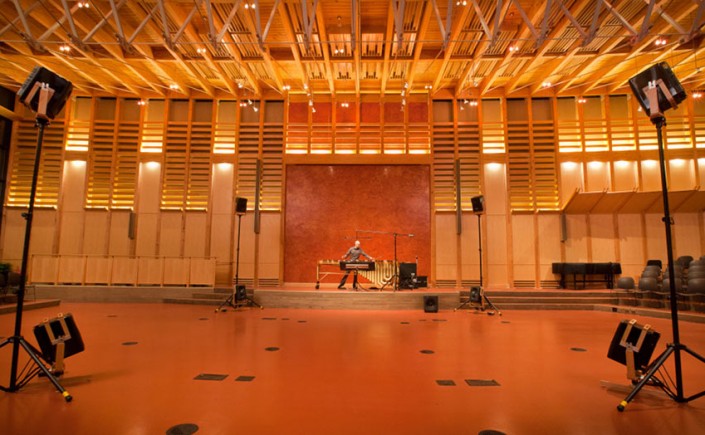
VIDI is an integrated software/hardware system for non-intrusive dynamic transformation of 3-dimensional motion information into streams of MIDI (Musical Instrument Digital Interface) data, according to user-defined criteria.

Energy
Research projects determine the optimum electrical power flow or examines reconfiguring power systems. Since changes in energy generation, storage and flow has regional and national implications, most projects involve extensive collaboration with state and/or federal agencies.

Algorithms and Software
Consider a project involving packing ellipsoids of given (but varying) dimensions into a finite container in a way that minimizes the maximum overlap between adjacent ellipsoids. A bilevel optimization algorithm is described for finding local solutions, for both the general case and the easier special case in which the ellipsoids are spheres. Algorithm and analysis tools from semi-definite programming and trust-region methods are key to the approach. The goal is to apply the method to the problem of chromosome arrangement in cell nuclei, and compare our results with the experimental observations reported in the biological literature.
Medical
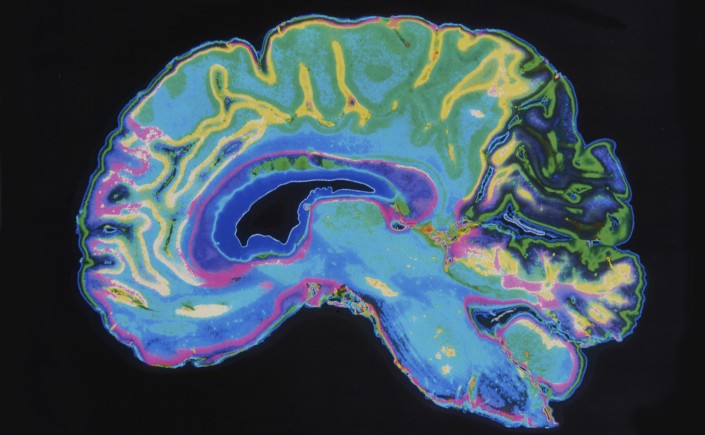
Our research on radiotherapy for cancer treatments optimizes a narrow X-ray beam radiation dose that targets tumors while minimizing radiation exposure in surrounding healthy tissue. Though bombarding a tumor can help treat cancer, unfortunately, radiation doesn’t pick and choose the cells it harms. Healthy tissue is often damaged in an act of “medical friendly fire.” With the help of optimization models developed at WID, a wide array of data — MRI pictures of internal organs, varying oxygen content of human tissue, scattering tendencies of radiation beams and even the rise and fall of the patient’s chest — can be parsed to minimize the collateral damage likely to be caused by lifesaving technology aimed in a less-than-optimal direction.

Environment
Our conservation-oriented research focuses primarily on examining how drivers of human behavior can elicit changes in the ecological processes and services at the landscape scale. Most of our work centers around either the potential consequences of cellulosic ethanol production in agricultural-dominated landscapes, or examining how predominately forested landscapes are affected under different economic scenarios. In addition to addressing research questions, our projects also strive to make current scientific concepts more accessible to non-scientists through the development of engaging and interactive computational tools and educational games.