

Making Sense of Microbiome’s Many Layers
Wisconsin Institute for Discovery researchers Margaret Thairu and Kris Sankaran are helping researchers make better use of complex microbiome data.
In a recently published mini review in Frontiers in Cellular and Infection Microbiology, Thairu, Sankaran, and co-author Kaiyan Ma, statistics department alumna, examine the statistical and machine learning challenges that arise when researchers combine multiple types of biological data collected over time.
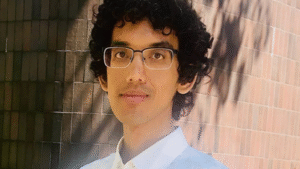
Kris Sankaran
Advances in molecular tools have enabled researchers to study microbial communities in much greater detail. Some methods show which microbes are present in a community, while others look at what those microbes and their hosts are doing at a molecular level. Together, these complementary datasets are known as multiomic data. While the ability to generate multiomic data has grown rapidly, the development and application of strong statistical methods for their integration into other applications has lagged.
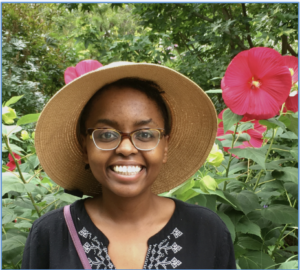
Margaret Thairu
Integration of data is important because combining different layers of biological information can provide a more complete picture of complex systems and help researchers identify mechanisms, biomarkers and possible targets for treatment.
Traditional statistical methods often struggle with microbiome data because the datasets are large, complex and contain many zero values. However, with effective integration of multiomic data, longitudinal data can offer more valuable insight into biological processes that may be driving a particular outcome.
From experimental design and data processing to statistical modeling and interpretation, the researchers look at ways scientists can evaluate whether relationships found across time and biological layers are reliable, including testing whether results remain stable when data, analysis choices or model settings change.
As new data tools such as spatial and single-cell profiling become cheaper and more accessible, and new statistical and computational models emerge, researchers will have even more ways to study microbial communities.
–Laura C. RedEagle
Related Posts
widiscoveryuw Instagram