

5PM Austin Hall
Where are you at this time and what are you most likely to be doing?
 Wrapping up experiments to go home, making overnight cultures of bacteria for experiments the next day
What would you be shocked to find yourself doing at this time?
Starting an experiment
What’s your favorite thing about this time of day?
I get to go home and see my loving partner
How can you tell if your work is going well?
I finish my experiments on time
What tells you it’s not going as expected? What do you do when that happens?
If I’m running late on experiments because things keep going sideways, I usually give up at 7 pm and start all over the next day.
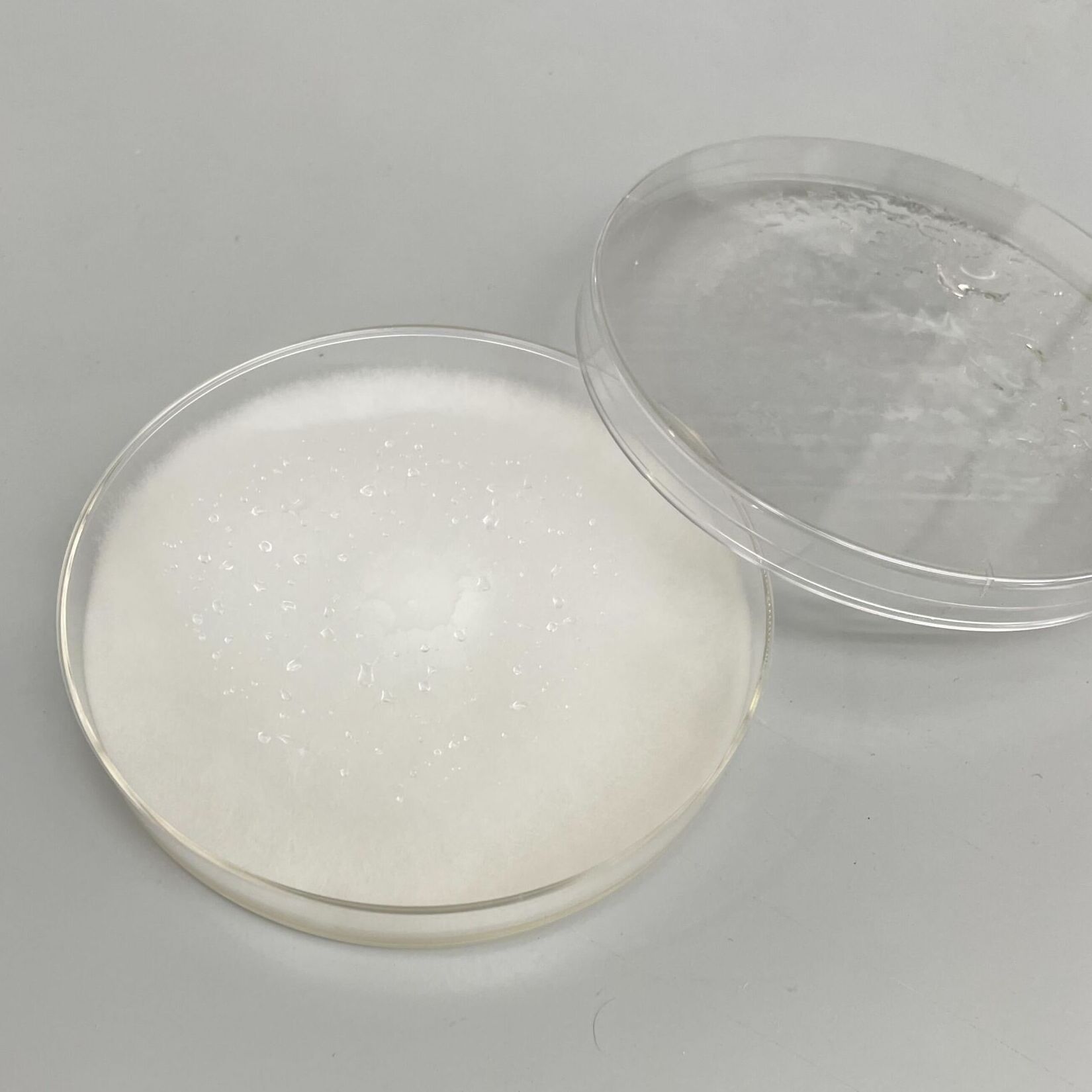
Plate of hyphae
The plate of white cotton is actually the same organism that produced the hyphae in the video! It is a plant pathogen, so our lab is interested in finding new molecules to protect plants from the disease. That's why it's so weird that under certain environments the bacteria ignores it, instead of kills it.
In the natural world, bacteria communicate with each other, and even different organisms! Here, we see bacteria forming moving ‘caravans’ to traverse a network of complex filamentous hyphae. In a lab setting, we usually see this bacteria produce antibiotics to kill the organism making the hyphae, but, in this instance, they seem to be getting along ‘swimmingly!’. I, along with my undergrad Charlie Halaska, are trying to determine what genetic ‘switches’ are involved in indentifying when another organism is a friend or an enemy. For best viewing, click ‘full screen’.