

9AM John Yin
Where are you at this time and what are you most likely to be doing?
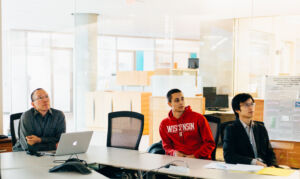
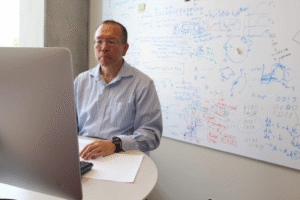 I’ll be up and about, likely at the desk in my office, in a meeting with my grad or undergrad researchers, or teaching my course (process dynamics and control — for chemical engineering senior students).
What would you be shocked to find yourself doing at this time?
I’d be surprised if I were not reading, not writing, not listening, not speaking, or not awake. I’d be soaking in the world of my co-workers, colleagues or students. Or I’d be sharing my ideas by email, Zoom, Google drive, or through in person meetings.
What’s your favorite thing about this time of day?
Around 9AM the office is pretty quiet and folks are just starting to show up for work. By 11AM I might have completed one or two of the tasks for the day. It’s great to build momentum for the rest of the day.
 Least favorite?
If some high-priority low-impact request pops up in my Inbox, then I might not get a chance to make progress on the things that matter more to me (meeting with co-workers, working on manuscripts, drafting proposals, and teaching).
How can you tell if your work is going well?
I’m only aware of the people or ideas in front of me, and time passes quickly.
What tells you it’s not going as expected? What do you do when that happens?
The unexpected can be bad or good. Budget cuts, rejected proposals or manuscripts, failed experiments. Or funded proposals, manuscripts accepted for publication, and new insights from our research. The ups and downs are all part of being an academic, having the freedom to pursue the ideas that I find most engaging or potentially impactful. The unexpected highs or lows go with the job, and they keep life in the lab interesting.