

Tiny Earth Abroad: Citizen Science in Spain and Portugal
Antimicrobial resistance (AMR) poses a growing threat to human, animal, and environmental health. As microorganisms like viruses, fungi, and parasites evolve to resist the very medicines meant to treat them, global systems are left increasingly vulnerable. AMR is often accelerated by the misuse or overuse of antibiotics and other antimicrobial compounds, creating an urgent need for both new drugs and public engagement.
A new publication by Victor Cid, Professor of Microbiology at the Complutense University of Madrid, and a network of MicroMundo instructors—Citizen Science to Raise Antimicrobial Resistance Awareness in the Community: The MicroMundo Project in Spain and Portugal—showcases an innovative approach to addressing the AMR crisis through education and discovery. MicroMundo is a Spanish and Portuguese adaptation of Tiny Earth, the global antibiotic discovery initiative launched at the Wisconsin Institute for Discovery (WID).
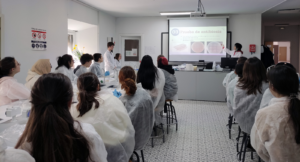
“We heard of Jo Handelsman and her team’s project, Tiny Earth,” said Cid. “It’s a gorgeous idea to involve students in a hands-on project to tackle a number one problem of global health.”
Jo Handelsman, Director of the Wisconsin Institute for Discovery, brought the program to the University of Wisconsin–Madison, and is the founder behind the program. Handelsman, who began her career in soil science, created Tiny Earth to connect classroom learning with real-world research. “It’s so rewarding to watch college students discover their passion for biology and research in the Tiny Earth classroom,” she says. The curriculum invites students to search for new antibiotics in soil samples from their own communities. As Cid explains, many of the antibiotics we use today were originally found in soil microorganisms, making soil a rich source for finding promising antibiotic discoveries. MicroMundo builds on this model, adapting it for use across Spain and Portugal and engaging thousands of students in hands-on science while raising public awareness about antibiotic resistance.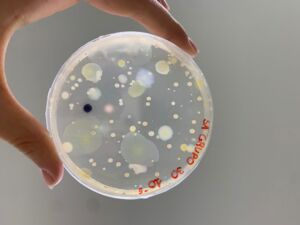
Tiny Earth has expanded into a global network of hundreds of institutions, with MicroMundo standing out as one of its most extensive international adaptations. Like other sites, instructors in Spain and Portugal implement Tiny Earth’s standardized curriculum, enabling students to collect and analyze soil samples in search of antibiotic producing microbes. What sets MicroMundo apart is its layered, community centered model: university students partner with nearby secondary schools to serve as peer mentors, guiding younger students through hands-on research as they collect environmental samples, culture bacteria, and test them for antibiosis. The initiative allows students to explore and gain confidence in real scientific inquiry.
“If trained by microbiologists, young students can perform soil sample analyses and contribute to new antibiotic discovery, and, more importantly, learn why we must fight antimicrobial resistance,” Cid explained. “They also bring that knowledge home, helping to communicate scientific culture to their families and friends.”
The publication highlights how MicroMundo has adapted the Tiny Earth model to fit educational systems and communities of Spain and Portugal. By partnering universities with secondary schools, the project emphasizes mentorship and accessibility, tailoring the curriculum to engage students from a wide range of backgrounds. A heat map in the article illustrates MicroMundo’s extensive regional reach, supported by data on participant demographics, self-reported learning gains, and pre- and post- program knowledge assessments. On the scientific side, students successfully isolated a wide range of bacterial genera, with a notable percentage of samples showing potential antibiotic activity–concrete evidence that community-based education can contribute meaningfully to real-world research.
Notably, the publication credits Tiny Earth for the original model and its pedagogic strategy of training students on One Health multidisciplinary concepts. It’s a testament to the program’s scalability and to the power of international collaboration in science education. The MicroMundo team successfully adapted the Tiny Earth curriculum for Spanish and Portuguese classrooms, preserving its scientific rigor while making it linguistically and culturally accessible.
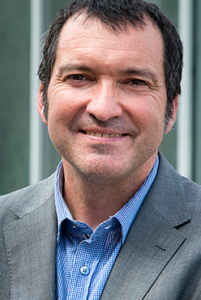
Victor J. Cid
“Like Tiny Earth, we should try and take the project beyond microbiology,” said Cid. “We want to involve chemists and start assessing the potential of the soil microorganisms that the students are isolating to eventually find new bioactivities.”
MicroMundo’s success shows how student-powered science can contribute meaningfully to both research and education, bridging classrooms and communities in the global fight against antimicrobial resistance. As Tiny Earth continues to grow, WID remains at the center of its evolution, supporting interdisciplinary partnerships that blend discovery, outreach, and global collaboration.
Cid reflected, “We may be saving millions of lives by seeding curiosity and knowledge in a young generation.”
–Morgan Ramsey
Related Posts

widiscoveryuw Instagram