
InBusiness Madison Professional of the Week: Ginger Ann Contreras
ppointer2024-11-14T22:01:02-06:00InBusiness Madison features Executive Director of WID's Illuminating Discovery Hub, Ginger Ann Contreras.

InBusiness Madison features Executive Director of WID's Illuminating Discovery Hub, Ginger Ann Contreras.
Notflawless.ai is a project of the Algorithmic Justice League. The Algorithmic Justice League is an organization that combines art and research to illuminate the social implications and harms of artificial intelligence. AJL’s mission is to raise public awareness about the impacts of AI, equip advocates with empirical research to bolster campaigns, build the voice and choice of most impacted communities, and galvanize researchers, policymakers, and industry practitioners to mitigate AI bias and harms.
WID's Data Science Hub is part of the COVID-19 Data Science Research Group that is interpreting data, using that data to create models, and sharing information and findings.
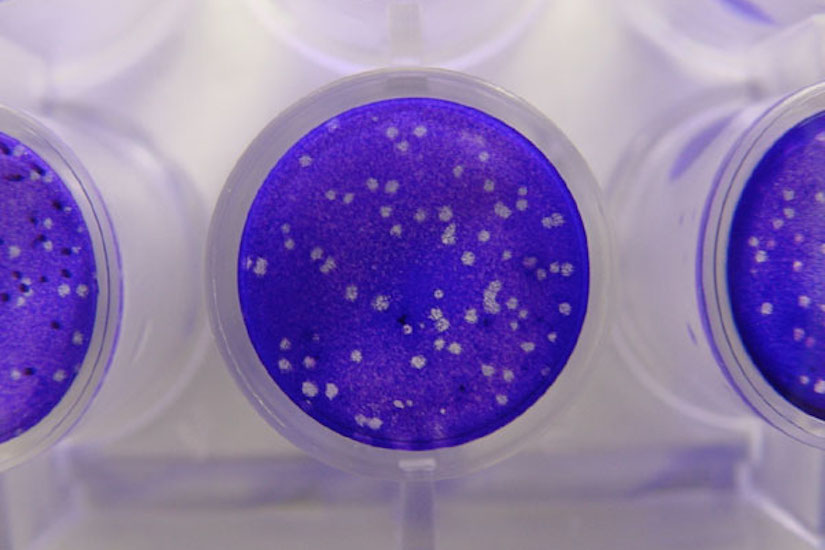
WID's John Yin, who uses experimental and computational methods to understand how viruses spread, is working on several projects that could have a direct bearing on COVID-19.
Brilliant and Diverse Graduate Research Scholars (BADGRS), founded by graduate students at the Wisconsin Institute for Discovery (WID), is a discussion space for grad students, postdocs, and other trainees. They want to destigmatize conversations about mental health.
WID Director Jo Handelsman shared a conversation on Clear+Vivid with Alan Alda and on WUWM about soil and microbes.
Discovery Fellow David Baum leads a team that has cultivated lifelike chemical reactions while pioneering a new strategy for studying the origin of life.
Science to Street Art is an initiative that aims to visually inspire STEM education and careers by creating science civic art through graffiti and hip-hop art forms.
A grant from the National Science Foundation will help a team of researchers at the University of Wisconsin–Madison discover the factors that contribute to successful public engagement with science endeavors. In particular, the team is interested in learning what motivations and experiences mold the profiles of scientists who engage successfully with the public.
university faculty and students, politicians and indigenous advocates discussed representation and inclusion in science at the panel moderated by Rabiah Mayas, associate director of Northwestern University’s Science in Society research center.
An interdisciplinary pair of WID researchers has developed a new nanocapsule delivery method for delivering the CRISPR-Cas9 gene editing tool. The new system could be used for many types of gene therapies.
"When I came we started thinking about how you generate interdisciplinary work. We took an experimental approach to figuring out whether there are deliberate things that we can do that will encourage truly broad collaborations across disciplines."
Eckhardt is also the Executive Director of the Weinert Center for Entrepreneurship and the Robert Pricer Chair in Enterprise Development. His research includes the use of information in entrepreneurship, firm formation, venture finance, and initial public offerings.
Sarah Miller was named the executive director of Tiny Earth this spring. We sat down with her to learn about her background and the future of Tiny Earth.
A team of researchers at the Wisconsin Institute for Discovery are combining computational and laboratory methods to more efficiently reprogram differentiated cells into induced pluripotent stem cells. Their work was published in Cell Reports on May 7, 2019.
Her election—alongside 200 other newly-elected members—recognizes her contributions to science.
WID's Tom Turng envisions a future in which surgeons can order mass-produced artificial blood vessels that arrive ready to use in bypass surgeries.
WID's new hubs—Data Science, Multi-Omics, and Illuminating Discovery—represent a new path forward for collaborative research projects and fields.
WID's John Yin and colleagues have described initial steps toward achieving chemistries that encode information in a variety of conditions that might mimic the environment of prehistoric Earth.
A paper published in eLife this week by an interdisciplinary team at WID describes new methods for reproducibly manufacturing brain and spinal cord organoids with strict control over morphogenic and developmental processes.
A second WID-led team joins NIH's Somatic Cell Genome Editing Consortium with a grant to study new methods of delivering the CRISPR/Cas9 system to the brain.
Professor Karen Schloss of WID's Visual Reasoning Lab tells the Wall Street Journal about the pitfalls of the rainbow-colored maps used to communicate during storms like the recent Hurricane Florence.
A new approach to climate data analysis hopes to improve regional forecasts.
Ten highly innovative projects have been chosen to receive University of Wisconsin–Madison Data Science Initiative funding, including two led by Wisconsin Institute for Discovery investigators.
Much remains mysterious in the realm of machine learning. The next generation of machine learning algorithms is expected to not only bolster national defense capabilities, but also benefit civilians.
Discovery Building
330 N. Orchard Street
Madison, WI 53715
1.608.316.4339
Space and events rental:
DiscoveryEvents@discovery.wisc.edu
608.316.4534

Feedback, questions or accessibility issues: media@wid.wisc.edu Privacy Notice | © 2026 | Board of Regents of the University of Wisconsin System