

WID Researchers Looking to the Future with UW2020 Awards
ppointer2024-11-14T22:11:39-06:00Investigators from WID are among the recipients of the latest round of UW2020 awards.

Investigators from WID are among the recipients of the latest round of UW2020 awards.
One of the UW Carbone Cancer Center members presenting is WID's Peter Lewis. His work focuses on how genes are turned on and off during embryonic development, and how misregulation in those genes can lead to some childhood cancers.
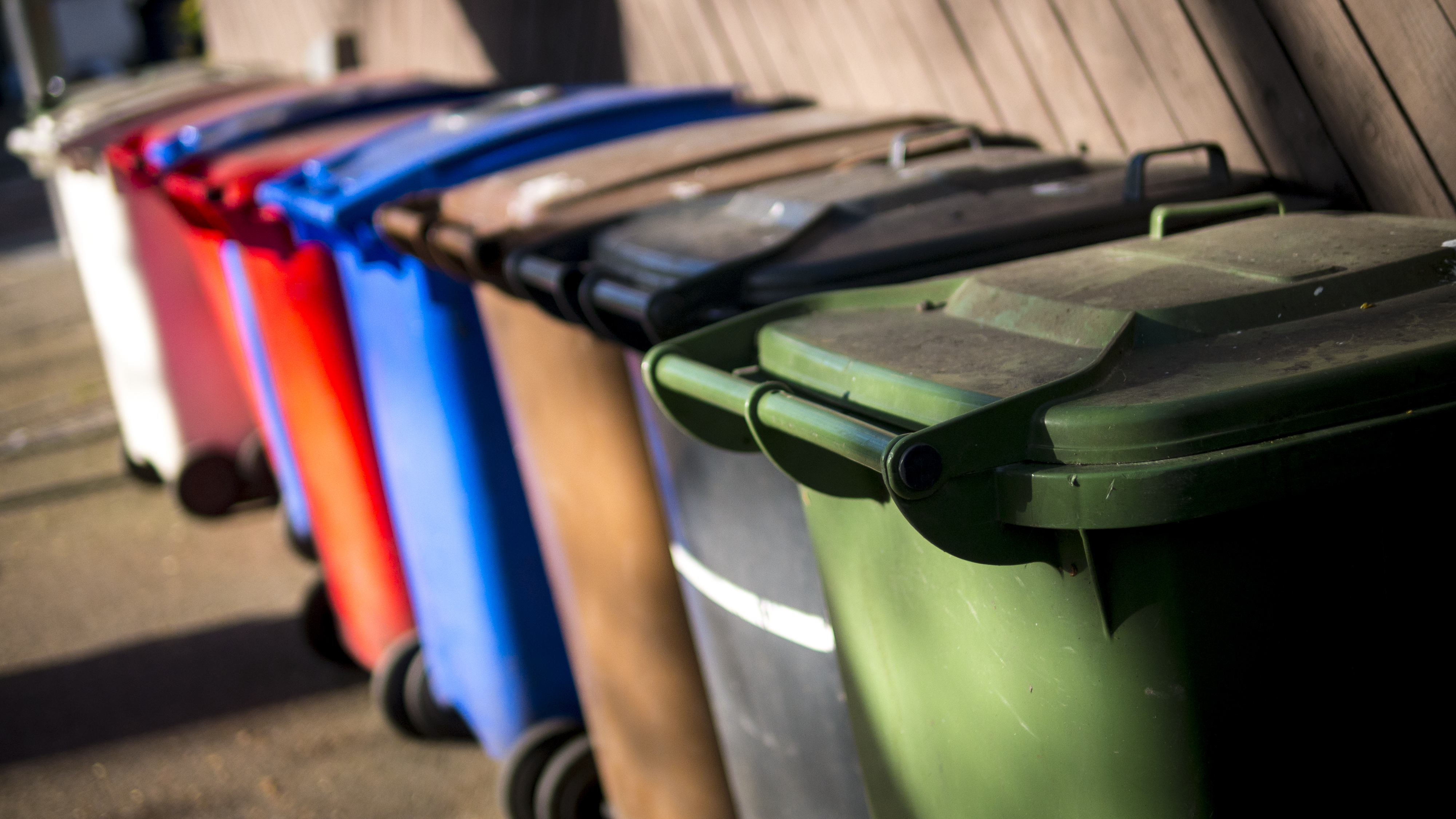
Karen Schloss and Laurent Lessard are working on a method for matching colors to people's expectations to send the right message — starting with the best colors for waste and recycling bins.
WID researcher Shaoqin Sarah Gong is working to more safely deliver a variety of drugs to treat cancer, heart disease and even blindness.
Instructors from schools across the state are getting their hands dirty in the search for antibiotics by joining a new program.
The Wisconsin Science Festival was a roaring success, with every corner of the Discovery Building containing something for people to see, hear, touch or manipulate.
The Washington Post writes about the harsh realities faced by women and minorities in science presented by WID Director Jo Handelsman at the Society for Neuroscience conference in Washington, D.C.
WID Director Jo Handelsman and the Catalysts for Science Policy were instrumental in assembling fantastic panels for mini-symposia about science policy and science communication geared toward graduate students, postdocs, and faculty but open to anyone interested in science.
CaSP is joining with the Wisconsin Institute for Discovery to amplify its voice on science policy issues. On October 4 in the Discovery Building, they host a panel on improving forensic science policy.
The new institute, housed at UW–Madison’s Wisconsin Institute for Discovery (WID), will play a key role in the future of data science, developing fundamental techniques for handling increasingly massive data sets in shorter times.
Xuehua Zhong recently received an outstanding investigator award from NIH via the Maximizing Investigators' Research Award (MIRA) mechanism to support her research. She talked about how she uses plants to study epigenetics in an interview with Grow magazine.
Handelsman is one of 34 faculty honored with Vilas professorships supported by the estate of professor, Senator, and Regent William F. Vilas.
Machine learning is a form of artificial intelligence by which algorithms are "trained" to analyze new information using existing data. Researchers are using it to identify individuals with a genetic condition known as fragile X premutation.
Lih-Sheng (Tom) Turng and Xiaofei Sun have developed a new method of fabricating highly foamed, injection-molded plastic parts.
Systems Biology researcher Kalin Vetsigian and graduate student Ye Xu recently published findings in Nature's Scientific Reports about the stochasticity of growth within Streptomycetes spore communities.
WID scientists are combining theory with experiment to try to understand how life could arise from lifelike chemical reactions under the right conditions.
In a paper forthcoming in the journal Cognitive Science, Living Environments Lab professor Karen Schloss and her colleagues investigated whether and why color preferences change according to the season.
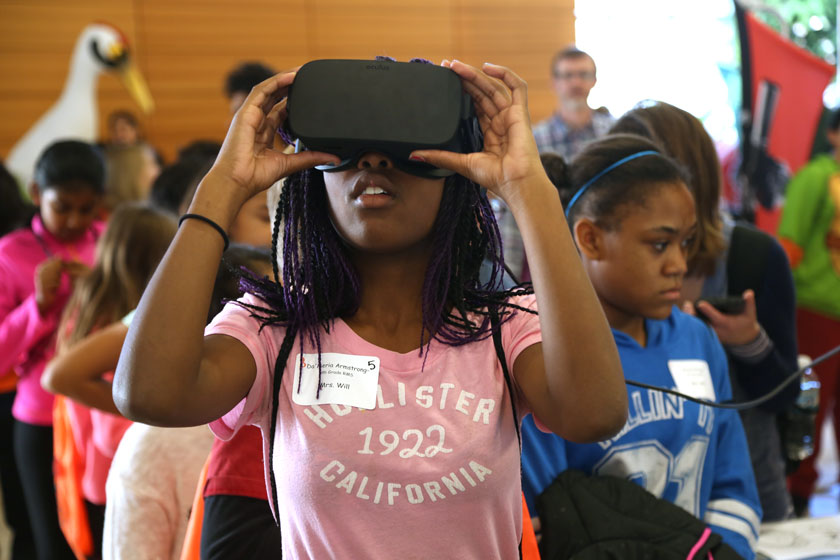
Two students from WID's Living Environments Laboratory are a part of the Badgerloop team that recently won an innovation award at the SpaceX Hyperloop competition, thanks in part to their work on Badgerloop VR.
UW program powers New Yorker contest featuring Rob Nowak and NEXT software
Jo Handelsman began her tenure as Director of the Wisconsin Institute for Discovery on February 1. Shortly before her start date, we sat down with her to talk about the future of WID and the course she intends to set.
Lih-Sheng (Tom) Turng and Xiaofei Sun have developed a new method to create foamed, injection-molded plastic blends with significantly increased toughness and ductility compared to conventional foamed parts.
Kevin Ponto, PI in the Living Environments Lab, explains virtual reality for Blue Sky Science.
Microbiome researchers bring $8 million in awards annually, which initiative looks to increase through grants.
Kris Saha illuminates the inner workings of gene editing.
The podcast "Is DNA the Basis for all Life in the Universe?" produced by The Naked Scientists, an affiliate of the BBC at Cambridge University features John Denu speaking of his recent findings on how the gut microbiome affects DNA expression.
Discovery Building
330 N. Orchard Street
Madison, WI 53715
1.608.316.4339
Space and events rental:
DiscoveryEvents@discovery.wisc.edu
608.316.4534

Feedback, questions or accessibility issues: media@wid.wisc.edu Privacy Notice | © 2026 | Board of Regents of the University of Wisconsin System