
How Simple Bubbles May Hold Clues to Life’s Beginnings
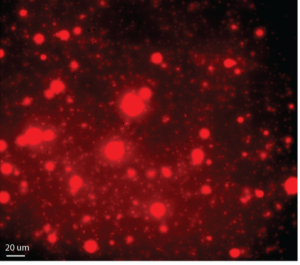
Microscopy image of vesicles
One of humanity’s most enduring questions is also one of its biggest: how did life begin? Long before DNA, genes, or cells as we know them existed, how did life emerge from non-living chemical systems? One possible explanation lies in simple chemistry, which has the capacity to evolve and become more complex.
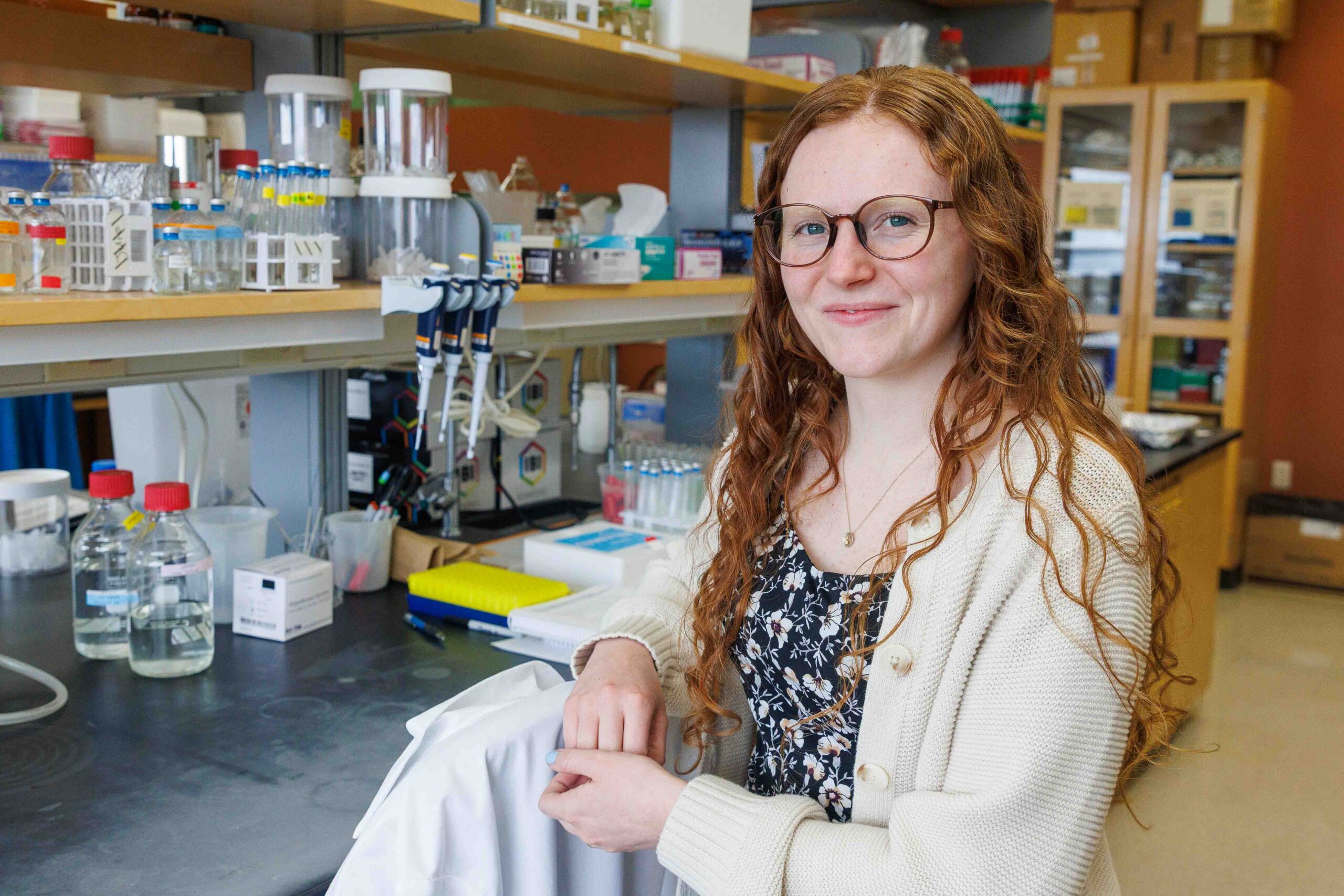
In a new study at the Wisconsin Institute for Discovery (WID), Tymofii Sokolskyi, a PhD candidate in Astrobiology & Evolution working in the David Baum Lab and the Department of Botany, takes a fresh look at that question. Sokolskyi is attempting to combine approaches from organic chemistry and evolutionary theory using an innovative approach: applying artificial selection on non-living chemical systems. Instead of studying life after genes exist, his work asks a more fundamental question: how do evolutionary processes get started before genetics?
“This is a fascinating puzzle,” says Sokolskyi. “It has implications for explaining why cells are the way they are and what life might look like elsewhere in the universe.” Many origin‑of‑life theories suggest that the right chemical environment evolved to support life on early Earth. But fostering the emergence of new, life‑like chemistries in the lab has been a long‑standing challenge.

Tym Sokolskyi
To explore this gap, Sokolskyi focuses on simple, cell‑like bubbles called fatty‑acid vesicles. When provided new food, individual fatty acid molecules, these tiny structures can grow and divide. It has been proposed based on theoretical work that they also can pass on traits without using DNA or genetic material. That makes them ideal candidates for investigating what chemical changes may have occurred before biology took over.
In a series of experiments, Sokolskyi and collaborators repeatedly mixed and “fed” vesicle populations, mimicking cycles of growth and turnover, while selecting for vesicles that made the solution cloudier. What he found was surprising. “When we looked at images and data from the feeding steps,” explains Sokolskyi, “it became clear that the vesicles from parental generations helped new offspring vesicles form.”
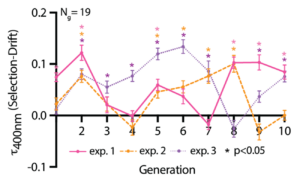 Only a handful of vesicles survived each experimental round, but those survivors played a big role. When fresh material was added, the remaining vesicles actively influenced how new ones formed, shaping the makeup of the next generation. Sokolskyi saw that vesicles that made the solutions cloudier were more likely to persist, hinting at early signs of a response to selection. Taken together, the results provide the first experimental evidence that artificial selection can impact a chemical system that predates genetics.
“The imaging and other tests show that these vesicles seem to cooperate,” says Sokolskyi. “Just a few that make it through each cycle end up shaping the next batch. In short, this is the first experiment to demonstrate a selection‑like response in pre‑life chemistry.” This work offers a compelling new window into life’s earliest stages, suggesting that evolutionary dynamics may begin before genes even exist. If confirmed and expanded, these findings could reshape how scientists think about the transition from chemistry to biology and where else in the universe similar processes might be unfolding.
Life, it seems, may have learned how to evolve long before it learned how to encode itself.
–Laura C. Red Eagle
This research was supported by the National Science Foundation, including through the Wisconsin Materials Research Science and Engineering Center under grant DMR-1720415 and NSF grant DEB 2218817; a NASA Future Investigators in NASA Earth Science and Technology award, 80NSSC24K1810; a Rosemary Grant Advanced Award from the Society for the Study of Evolution; and the University of Wisconsin–Madison Department of Botany.