



The Latest
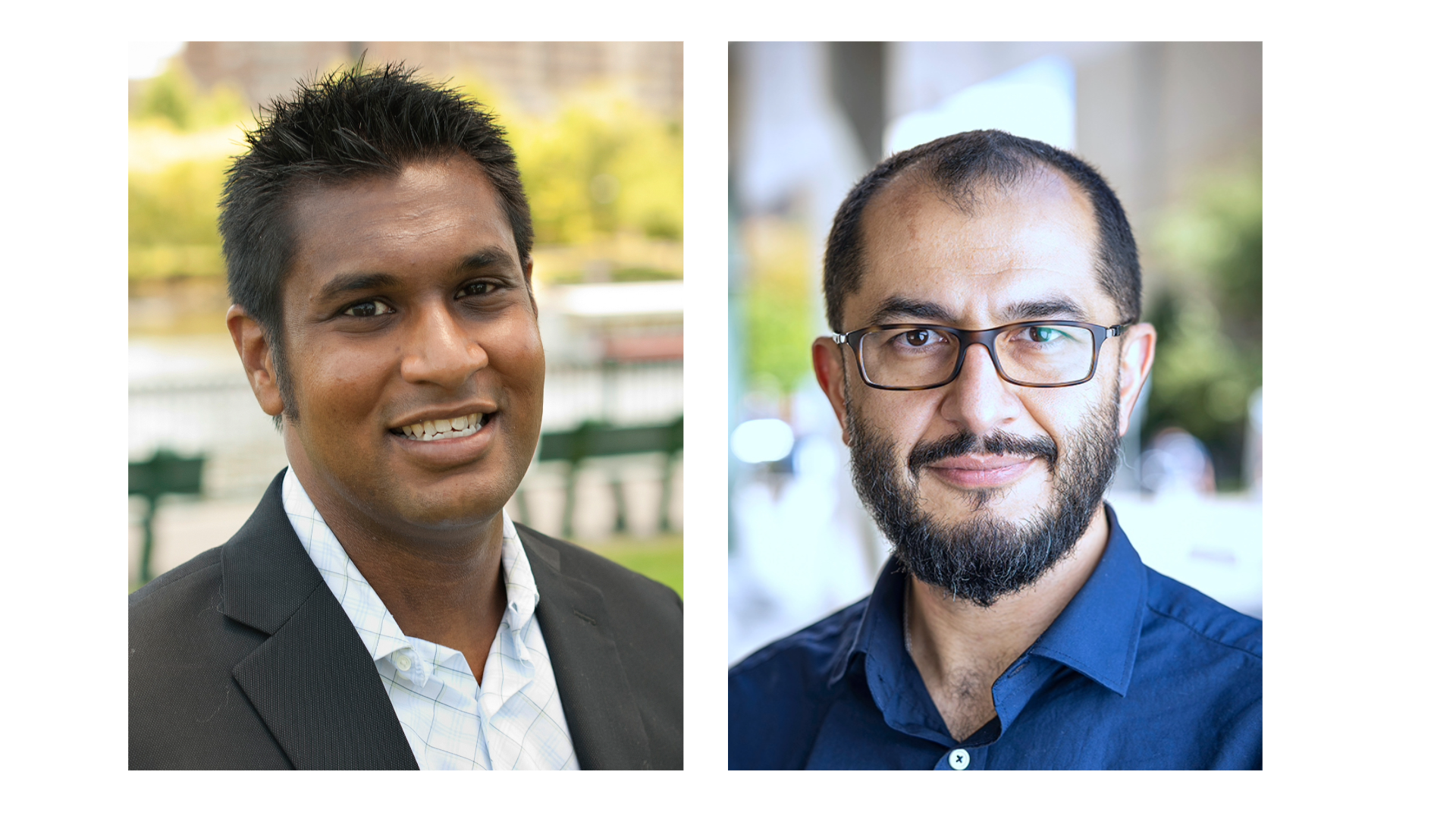
Saha and Mutlu Named Engineering Moonshot Co-Leaders
Two Wisconsin Institute for Discovery faculty members have been named co-leaders of UW–Madison College of Engineering's Engineering Moonshots, an initiative gathering expertise from across campus to find solutions in areas of personalized medicine, autonomous systems, fusion energy, quantum technologies and sustainable resources.
Explore what makes us human at the 16th Annual Wisconsin Science Festival
The 16th annual Wisconsin Science Festival will explore the science of Us — who we are, what it means to be human, and what humans are capable of — all across the state from Oct 15-25. “The Wisconsin Science Festival is a celebration of curiosity in action, inviting people of all ages and from every corner of our state to explore, ask questions and discover something new,” says Samantha Mulrooney, director of the Wisconsin Science Festival at the Wisconsin Institute for Discovery. “It’s also a chance to shine a light on the incredible innovative and creative minds who make Wisconsin such a special place.”
Making Sense of Microbiome’s Many Layers
In a recently published mini review in Frontiers in Cellular and Infection Microbiology, Margaret Thairu and Kris Sankaran, and co-author Kaiyan Ma, statistics department alumna, examine the statistical and machine learning challenges that arise when researchers combine multiple types of biological data collected over time to make better use of complex microbiome data.
Building Community Through Indigenous Languages
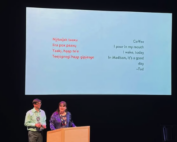
The Indigenous Language Table begins its fifth year at WID on Sept. 9, continuing to create a space for Indigenous language speakers and learners to connect, practice and strengthen their languages together. Last April, members of the table brought that work to a sold-out audience at Madison’s Playhouse Theater before former U.S. Poet Laureate Joy Harjo took the stage. In place of a land acknowledgment, participants shared original poems written and spoken entirely in Ho-Chunk about Teejop, or “four lakes,” the Ho-Chunk name for Madison. English translations appeared on a screen behind them, allowing the audience to hear the language as it has been spoken in this place for thousands of years.