
Expertise
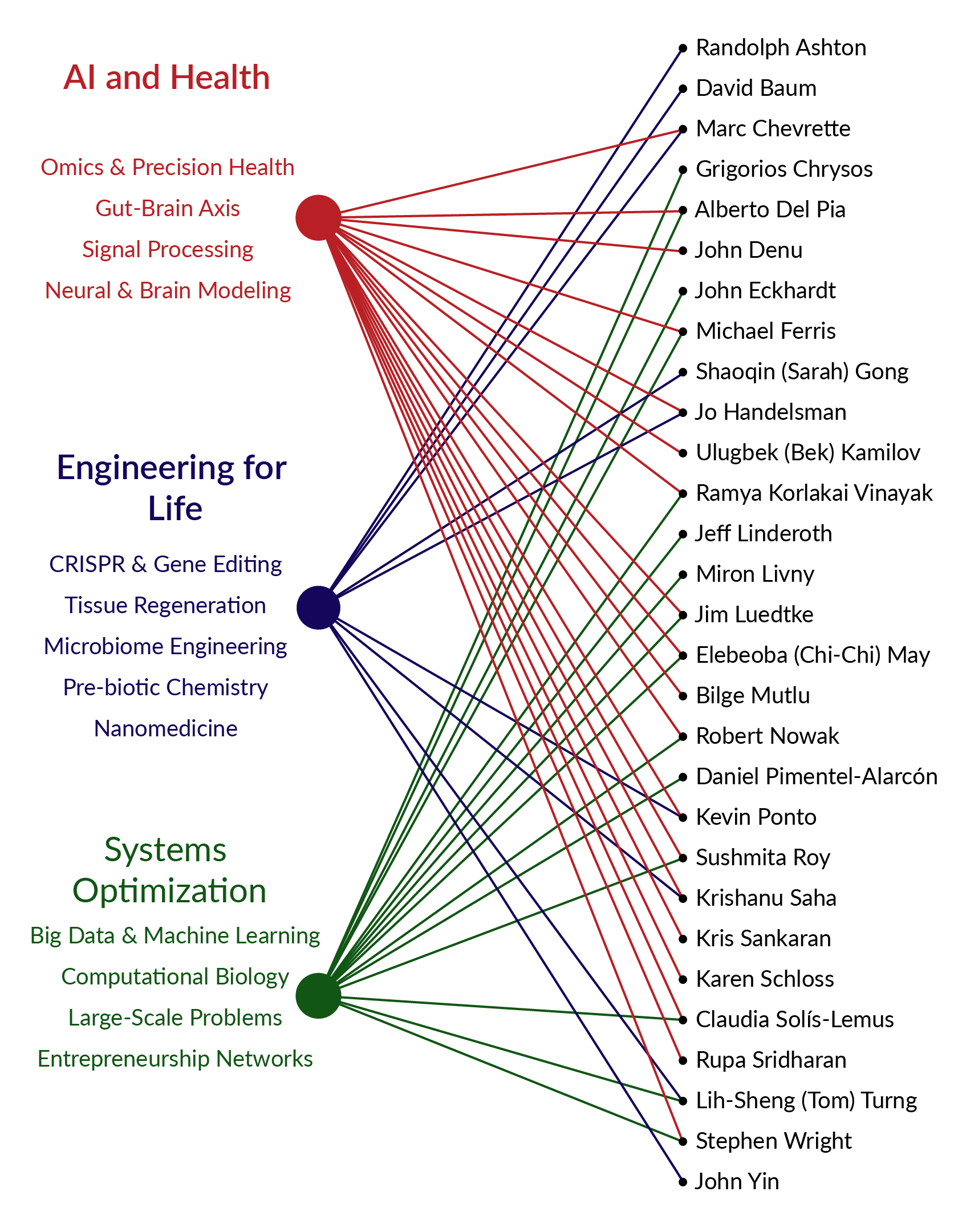
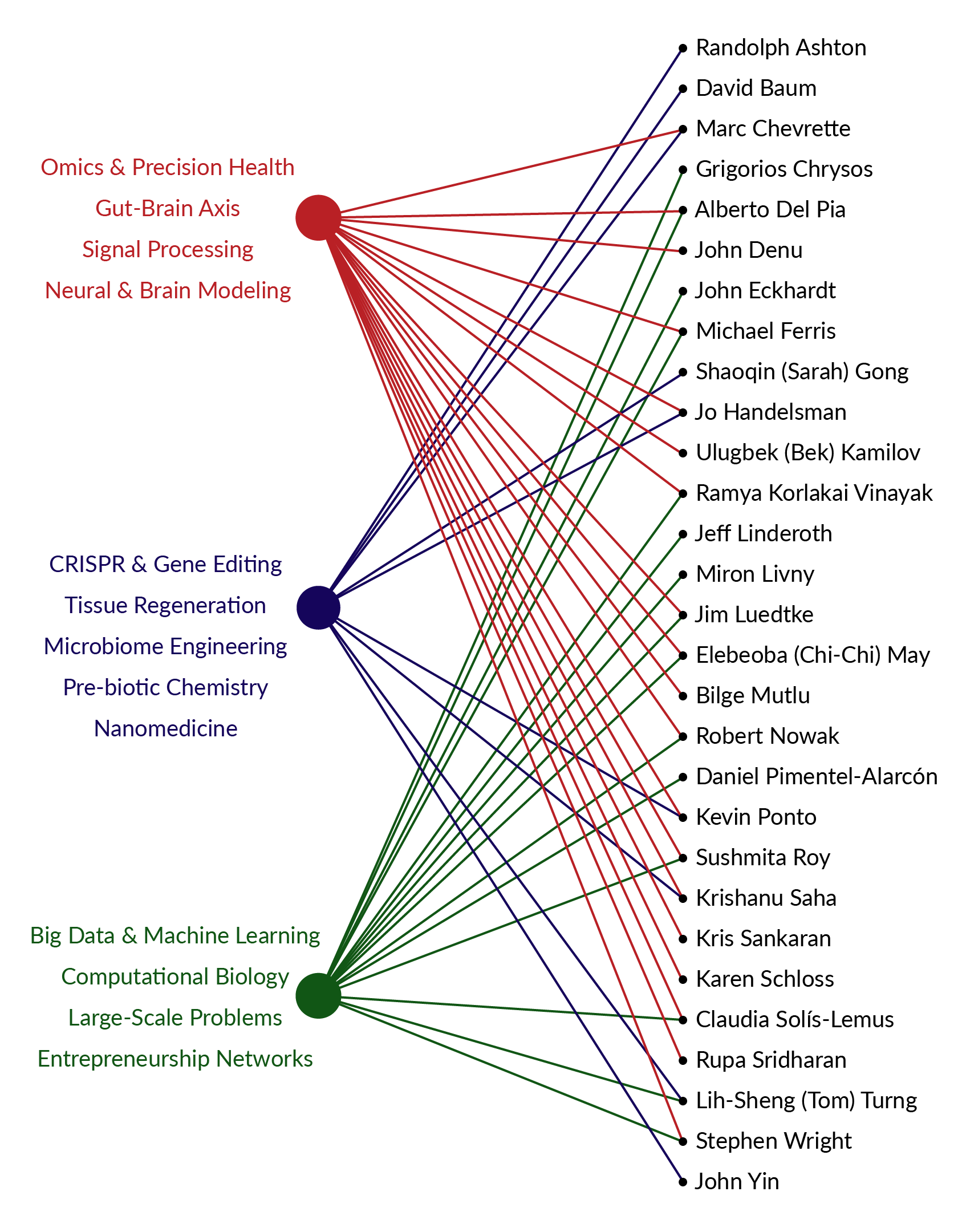 AI and Health Engineering for Life Systems Optimization Randolph Ashton David Baum Marc Chevrette Grigorios Chrysos Alberto Del Pia John Denu Jon Eckhardt Michael Ferris Shaoqin (Sarah) Gong Jo Handelsman Ulugbek (Bek) Kamilov Ramya Korlakai Vinayak Jeff Linderoth Miron Livny Jim Luedtke Elebeoba (Chi-Chi) May Bilge Mutlu Robert Nowak Daniel Pimentel-Alarcón Kevin Ponto Sushmita Roy Krishanu Saha Kris Sankaran Karen Schloss Claudia Solís-Lemus Rupa Sridharan Lih-Sheng (Tom) Turng Stephen Wright John Yin